
UltraTech Cement was the biggest gainer in the Sensex chart, climbing 3.13 per cent, followed by Kotak Mahindra Bank, Tata Motors, Axis Bank, Maruti, Bajaj Finserv, Bajaj Finance and Mahindra & Mahindra. In contrast, Infosys, Tech Mahindra, Tata Consultancy Services, Wipro, Bharti Airtel, HCL Technologies, ICICI Bank and Nestle were among the laggards.

'Whether I am optimistic or pessimistic is not the issue; I am just going by the evidence available.' 'The Indian economy and financial sector are now well-placed and very resilient in dealing with any kind of spillover coming from the external world.'

The bias for the BSE benchmark index, technical charts suggest, is likely to remain bullish as long as the index holds above 75,600 levels for the rest of the year.

Despite the rally in equities over the last few years, India, according to Christopher Wood, global head of equity strategy at Jefferies, is still in early stages of an equity cult. Any changes to the capital gains tax for equities - both long-term and short-term - in Budget 2024 scheduled to be announced on July 23, he believes, can trigger a bigger correction that what the markets witnessed post the Lok Sabha election outcome on June 4 that saw the Bharatiya Janata Party (BJP) lose majority, though it was able to form the government with the help of coalition partners.

Amid cooling raw material prices, the crude-oil linked companies, which includes paint and tyre firms, have been on a roll over the past one year. Shares of related companies have gained up to 84 per cent, as against a 14 per cent rise in the S&P BSE Sensex. Analysts, however, believe stretched valuations in both these sectors could trigger a de-rating.

The rupee has depreciated by 0.6 per cent so far in the current financial year.

Among the 30 Sensex companies, Mahindra & Mahindra, Power Grid, Sun Pharma, Nestle, UltraTech Cement, NTPC, ITC, ICICI Bank, Titan, Bajaj Finserv, Bharti Airtel, and HDFC Bank were among the biggest gainers. IndusInd Bank, Adani Ports, Tata Steel, Reliance Industries, Axis Bank and Bajaj Finance were among the laggards.

If you don't make the necessary adjustments after October 1, 2024, you'll stop earning interest on accounts that aren't in compliance rediffGURU Milind Vadjikar

Tata Power declared encouraging results for the April-June quarter (Q1) of the 2023-23 financial year (FY24). The firm's revenue rose 5 per cent year-on-year (Y-o-Y) to Rs 15,210 crore. It was driven by higher sales to distribution companies (discoms) and capacity addition in renewables. Company's adjusted profit after tax (PAT) rose 3 per cent to Rs 906 crore with reported PAT at Rs 1,100 crore on a one-time gain of Rs 235 crore.

Equity benchmark indices Sensex and Nifty hit their fresh record levels on Thursday after lower inflation numbers raised hopes of an interest rate cut by the RBI. Besides, heavy buying in capital goods, consumer durable and industrial stocks also helped the indices, traders said. Retail inflation continued its downward slide to reach a one-year low of 4.75 per cent in May due to a marginal decline of prices in the food basket and remained within the Reserve Bank's comfort zone of below 6 per cent, according to government data released on Wednesday.

Trumponomics, poor growth, and high valuation certainly don't make a bullish recipe for Indian markets, warns Debashis Basu.

It is to be seen if SBI under Setty, who will have a three-year term, can ride the economic cycle to take SBI to new heights, navigating some of these challenges.

An aggressive rate hike by the US Fed and the possibility of a recession can trigger a slide in these stocks, which will be a good opportunity to buy from a long-term perspective.

'Investors should hold equity assets for 3 to 5 years.'
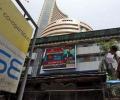
On the Sensex chart, Bajaj Finserv, Maruti, Larsen & Toubro, Bajaj Finance, Infosys, Axis Bank and ICICI Bank were the biggest gainers. Hindustan Unilever, JSW Steel, Titan, NTPC and Tata Motors were among the laggards.

Experts feel select companies in banking, automobiles, financial services & real estate will gain from lower interest rates

'A 20 per cent equity allocation to ESG funds is a good start.' 'As more evidence on ESG performance builds, investors may increase allocations.'

'Investors with a long-term investment horizon and the risk appetite for fluctuations in property values may find SM Reits a viable option.'

Among the Sensex stocks, JSW Steel, Asian Paints, Maruti Suzuki India, NTPC, Adani Ports and Special Economic Zone, Bharti Airtel, ITC and Tech Mahindra were the major gainers. Reliance Industries, Tata Motors, Infosys, Mahindra and Mahindra, Bajaj Finance and Axis Bank were the laggards.
Given the outlook for interest rates, analysts seem bullish on this space.

Competition in the fast-growing quick commerce sector is heating up as Swiggy Instamart faces a tough challenge in narrowing the gap with Blinkit, which currently dominates the market. In the second quarter (Q2) of 2024-25 (FY25), Instamart's gross order value (GOV) rose by 42.1 per cent quarter-on-quarter (Q-o-Q) and 75.5 per cent year-on-year (Y-o-Y), reaching Rs 3,382 crore.

From the 30 Sensex firms, Mahindra & Mahindra, JSW Steel, Maruti, Tata Steel, Larsen & Toubro, ICICI Bank, Power Grid, Nestle, Bharti Airtel and Adani Ports were the biggest gainers. Tata Consultancy Services emerged as the only laggard.

From the 30 Sensex pack, State Bank of India, Mahindra & Mahindra, Bharti Airtel, Titan, HDFC Bank, IndusInd Bank, Axis Bank and Bajaj Finance were the biggest laggards. JSW Steel, Tech Mahindra, Larsen & Toubro, Hindustan Unilever, HCL Technologies and Reliance Industries were among the gainers from the pack.

Bharti Airtel was the biggest gainer in the Sensex pack, rising 1.63 per cent, followed by Tata Steel, ICICI Bank, Titan, Asian Paints and Ultratech Cements. On the other hand, M&M, NTPC, Tata Motors, TCS and PowerGrid were the major losers.

Equity mutual funds witnessed an inflow of Rs 35,943 crore in November, marking a drop of 14 per cent on a month-on-month basis, amid heightened volatility in stock markets driven by various macroeconomic factors, geopolitical events and US election results. Despite this, it marked the 45th consecutive month of net inflows into equity-oriented funds, reflecting the growing popularity of mutual funds among investors, according to data from the Association of Mutual Funds in India (AMFI) released on Tuesday.

Benchmark indices Sensex and Nifty settled with gains for the third straight session on Monday, helped by buying in auto, banking and capital goods shares despite a spike in crude oil prices. The 30-share BSE Sensex rose 114.92 points or 0.19 per cent to close at 59,106.44 points with 22 of its components ending in the green and eight closing lower. It moved in a range of 58,793.08 points to 59,204.82 points during intra-day trade.

The exodus of foreign investments from Indian equity markets continued unabated, with FPIs pulling out nearly Rs 20,000 crore in the last five trading sessions on higher valuations of domestic stocks and shifting their allocation to China. As a result, foreign portfolio investors (FPIs) have turned net sellers in the equity market, with total outflows reaching Rs 13,401 crore for 2024 so far. Going ahead, the FPI selling trend is likely to continue in the near term till data indicate the piossibility of a trend reversal.

Equity indices fell on Thursday, mirroring weak global market trends following the US Federal Reserve's interest rate hike and hawkish stance. The 30-share BSE Sensex declined 337.06 points or 0.57 per cent to settle at 59,119.72. During the day, it tanked 624 points or 1.04 per cent to 58,832.78. The NSE Nifty went lower by 88.55 points or 0.50 per cent to end at 17,629.80.

Probably 35 bps. There could be even an encore in February 2023 to take the policy rate to 6.5% before the financial year ends, predicts Tamal Bandyopadhyay.
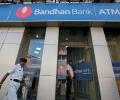
Bandhan Bank has declared disappointing results for the first quarter of the 2023-24 financial year (Q1FY24). While the market has been braced for known issues around microfinance exposures in West Bengal and Assam, there is higher stress in the portfolio. This means higher credit costs and poorer asset quality, leading to target downgrades by analysts.

As a panel of senior ministers deliberates on the need to review curbs on exports of some rice varieties, data shows that since outbound shipments saw restrictions in July-August last year, the non-basmati segment has suffered more than basmati exports. Sources said the panel is expected to soon deliberate on a few suggestions to ease the export curbs on some rice varieties due to higher-than-required stocks in the central pool. The panel, some observers feel, may also postpone the decision to ease the export curbs till a firm picture emerges on the latest kharif paddy sowing.

The July-September quarter (Q2) results for 2024-25 (FY25) from the largest listed consumer electrical solutions companies, Havells India and Polycab India, followed similar trends, demonstrating robust revenue growth while falling short of profitability expectations. Both companies witnessed overall growth in the 16-30 per cent range, but margins declined by 130-290 basis points (bps) year-on-year (Y-o-Y). Although brokerages are bullish on long-term prospects and have raised revenue projections, earnings forecasts have been revised downward due to margin pressures.

Investors must adopt a balanced approach, incorporating both styles in their portfolios.

'Margins will be an outcome of that. They will likely remain somewhat range-bound.'

Investor interest in banks and real estate companies dipped and these stocks witnessed correction post the policy announcements.

Retail investors have become a force to reckon with in the last 10 years with their ownership of Indian equities rising 800 basis points, or 8 per cent, to 23.4 per cent during this period, suggests a recent note from Morgan Stanley. This number, Morgan Stanley said, is set to rise in the next few years as Indian households are still underinvested in equities. India's demographics, policy framework, investor education and modest positive real rates, it said, will fuel the 'equity cult' in India.

From its recent lows, the stock of consumer major Marico is up 7 per cent on the back of a better-than-expected June quarter performance and robust outlook. In a pre-quarter update, the management indicated that domestic volume growth should witness an improvement in FY25, while other segments (growth portfolio, international business) too would see traction going ahead. The near-term trigger is strong sales and operating performance for Q1FY25.

Passenger vehicle retail sales in India witnessed a 10 per cent on-year jump in July driven by new model launches and enhanced discounts, industry body FADA said on Monday. Total passenger vehicle retail sales rose to 3,20,129 units in July, as compared to 2,90,564 units in July 2023. "Dealers reported benefits from good product availability, attractive schemes, and a wider range of products," the Federation of Automobile Dealers Associations (FADA) vice president C S Vigneshwar said in a statement.

Among the Sensex constituents, 20 stocks ended the session in green with HDFC Bank, Titan, Tech Mahindra, and Asian Paints being the major gainers. TCS, Maruti, Kotak Mahindra Bank and Bajaj Finserve were the other gainers. In contrast, SBI, Bharti Airtel, JSW Steel, PowerGrid, ITC and Reliance closed the trading with losses.

Macroeconomic data announcements, the last batch of Q1 earnings and global trends are the major factors that would influence trading sentiments in the equity market in a holiday-shortened week ahead, analysts said. Besides, trading activity of foreign investors would also be a crucial factor in dictating movement in the market. Equity markets would remain closed on Thursday for Independence Day.
